The Islander, John Ings, 1842
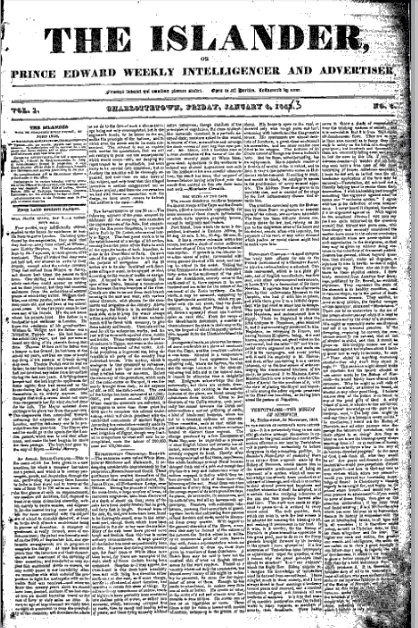
Front page of The Islander, dated January 6, 1843.
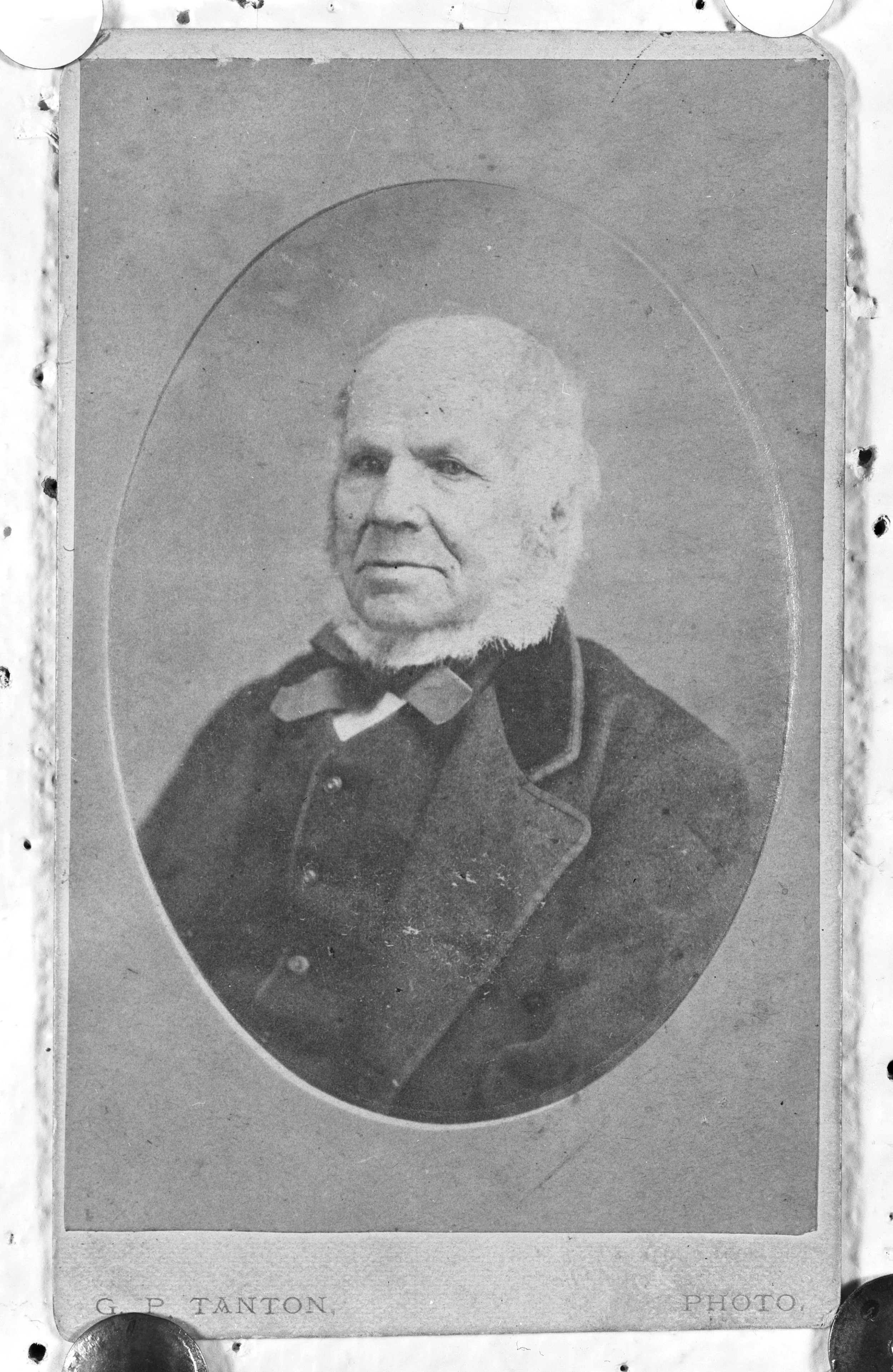
Studio portrait of John Ings, ca. 1860s
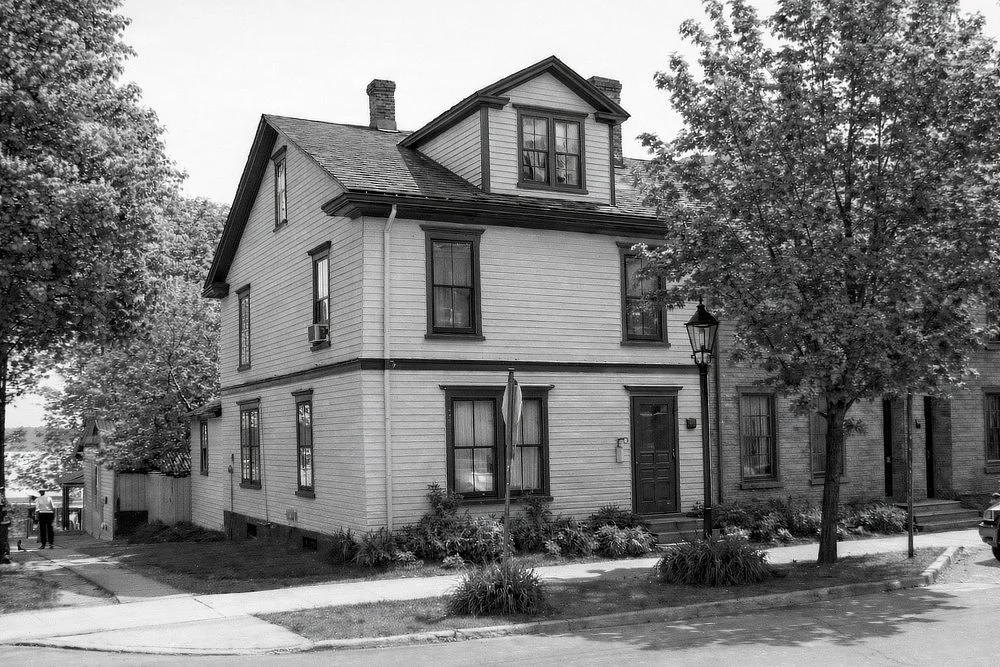
The Islander office, 108 Water Street, Charlottetown, PEI. Built in 1847, the building housed both the newspaper and a public reading room. The reading room also offered a form of employment exchange, connecting servants with prospective employers, an unusual and practical service for its time. It was designated a historical building in 2005. Today, the building is a private residence.
Defending the established order – The Islander and the politics of Prince Edward Island
John Ings (1815 – 1907) came to Prince Edward Island with his family in 1825. His father, a British naval engineer, provided both the means and the stability that allowed Ings to enter the printing trade – a profession that, at the time, required not only skill but capital.
In 1842, he founded The Islander in Charlottetown. From its earliest days, the paper took a firmly Conservative stance. It opposed both escheat¹ and Responsible Government, positioning itself as a defender of the established order – the Tories and the Island’s small but powerful ruling elite, often referred to as the Family Compact.
Published weekly on Fridays, The Islander offered more than political commentary. Like many papers of its day, it reflected the concerns of its community, carrying articles on temperance, education, and public affairs. Yet politics remained at its core, and its editorial voice was unmistakable.
In 1850, Duncan MacLean became editor, ushering in a period of sharper political engagement. His appointment also marked the beginning of a long and often bitter rivalry with Edward Whelan, the influential Liberal editor of The Examiner, founded in 1847. The two papers ,and their editors, came to represent opposing sides of the Island’s political divide.
This rivalry extended beyond the editorial page. The position of Queen’s Printer, a role that carried both prestige and financial security, shifted back and forth between the two men. Whelan held the post in 1851; Ings replaced him in February 1854; by August, Whelan had reclaimed it. These changes reflected not only personal competition but the shifting political fortunes of their respective factions.
Ings retired in 1873, bringing an end to The Islander after more than three decades of publication. In a fitting turn, the press that once produced a staunch Conservative paper would, later in the 1870s, be used to print its former rival, The Examiner. The building remained, but the political voice it once carried had passed into history.
Note: escheat – the legal reversion of property to the Crown when a person dies without heirs. On Prince Edward Island, the term took on political significance, as many reformers saw escheat as a way to reclaim large estates held by absentee landlords and make land available to tenants.
The Question of Land
Any discussion of early Prince Edward Island newspapers inevitably leads to the issue of land ownership. The ‘land question’ shaped both politics and public opinion for decades.
In 1767, the Island was divided into 67 lots of roughly 20,000 acres, granted to individuals with claims upon the British Crown. Over time, many of these lots were consolidated, and by the early 19th century, a small number of largely absentee landlords controlled vast estates.
These owners rarely sold their land. Instead, they leased it to tenant farmers, creating a system that many Islanders saw as unjust – even feudal in nature. By 1841, fewer than one-third of those working the land actually owned it.
The issue dominated political debate and filled the pages of newspapers such as The Islander and The Examiner, each taking opposing views. It was not until 1873, when Prince Edward Island joined Confederation, that the matter was finally resolved. One of the terms of union required the government to purchase the large estates and make them available to the people who lived on them.
-
University of Prince Edward Island, Robertson Library, Island Newspapers.
Islander. https://islandnewspapers.ca/islandora/object/newspapers%3A452/newspaper_aboutImages
The Islander, Charlottetown, January 6, 1843. Image accessed via Google News Archive. https://news.google.com/newspapers?nid=hMod-77fHWUC&dat=18430106&printsec=frontpage&hl=en
The Islander office: Canada’s Historic Places. https://www.historicplaces.ca/en/rep-reg/place-lieu.aspx?id=3202
Portrait: John Ing: Courtesy of the Public Archives and Records Office of Prince Edward Island. Acc3894/2. Photo number POOO7959.